
Brief.
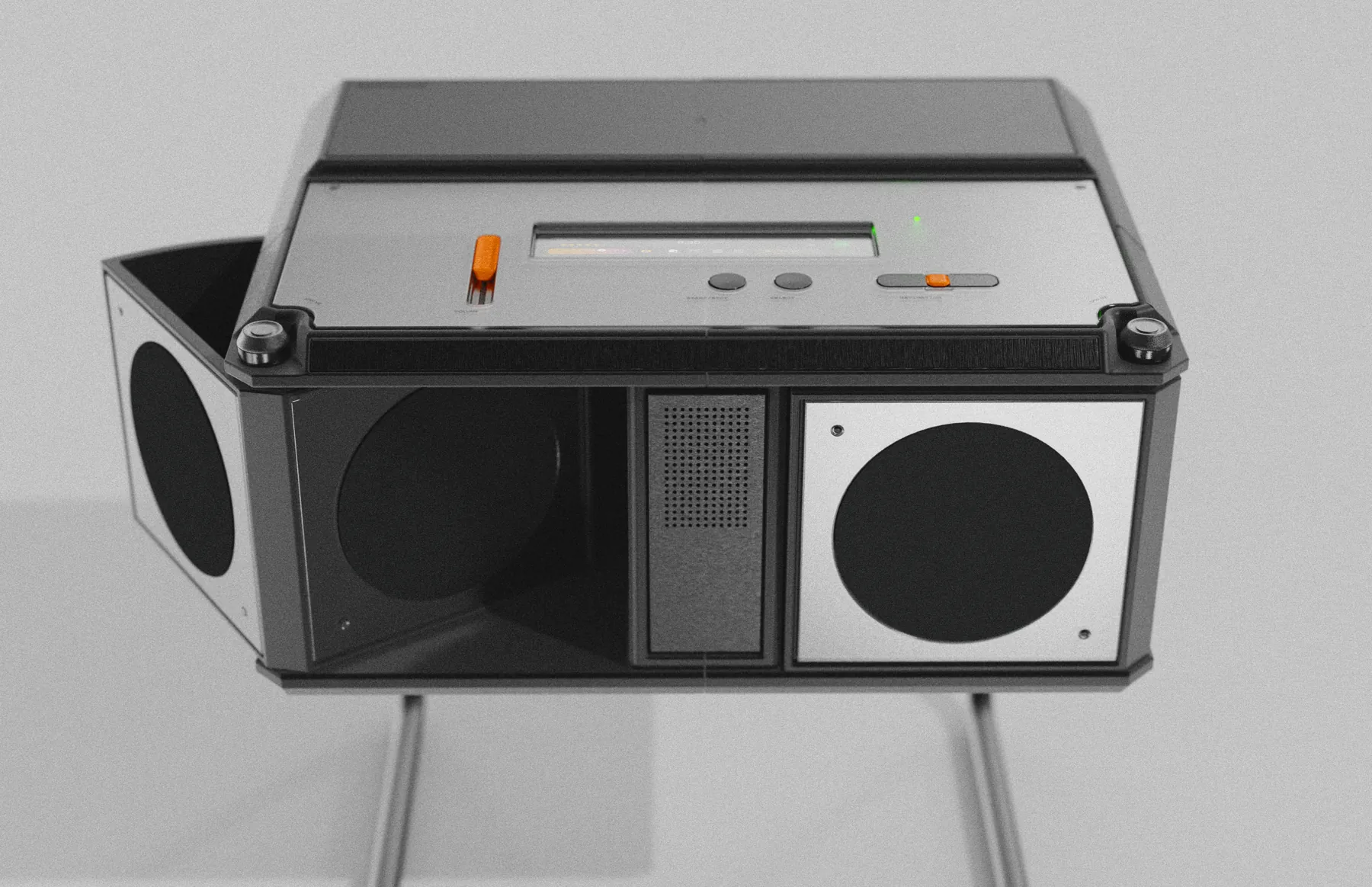
The brief was to design a piece of furniture based on a concept pulled from a book. I focused on creating something functional for small spaces, combining a speaker, clock, and nightstand into one object while grounding it in a clear narrative idea.
Concept.
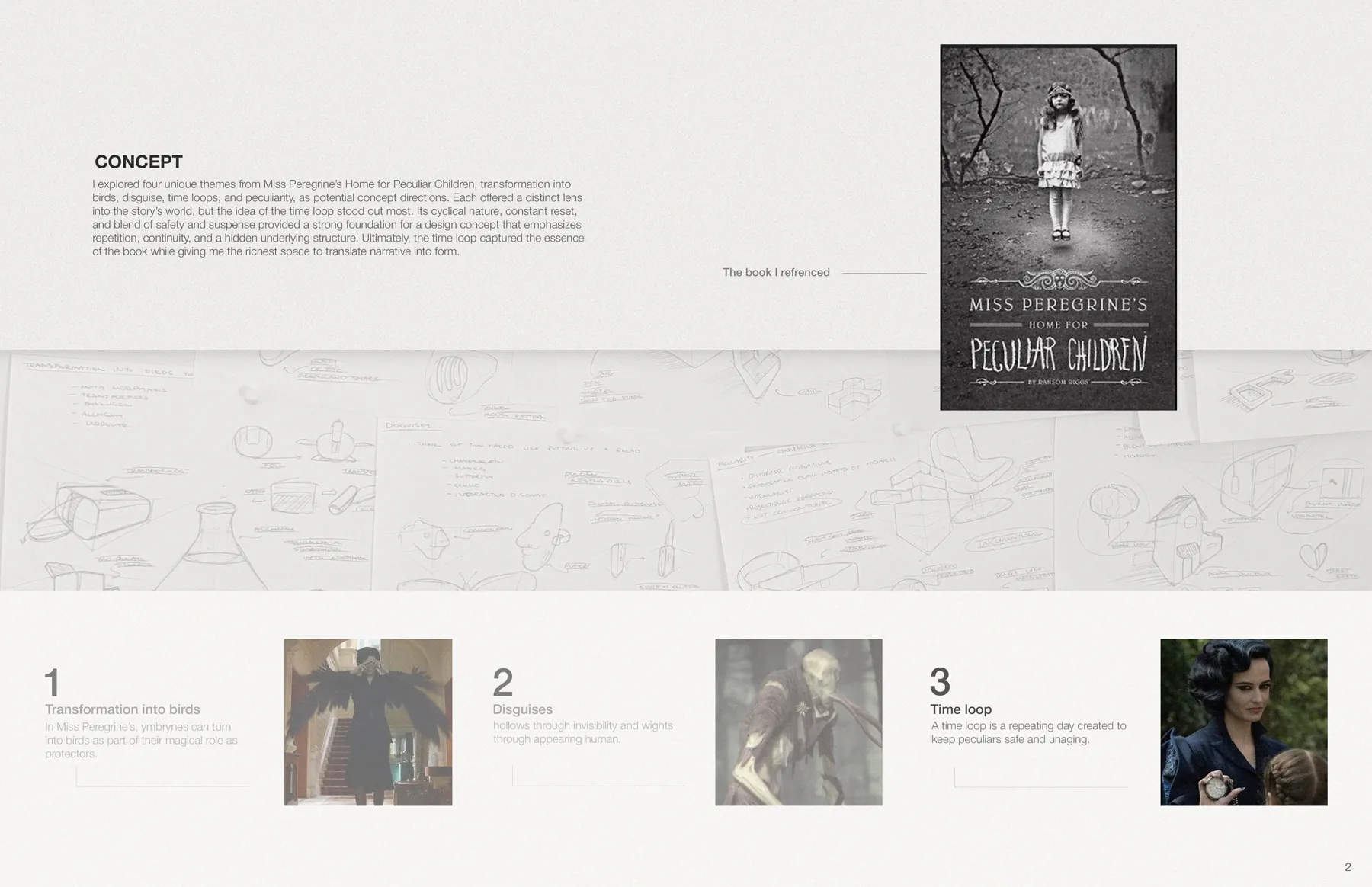
The concept started with a few directions pulled from Miss Peregrine’s Home for Peculiar Children. I explored transformation, disguise, time loop, and sanctuary. Each had potential, but only one carried through both the form and the interaction.
Retro-tech already behaves like a loop. It fades out, then comes back over time. That idea shaped the direction of the product. The form references the past, and the interaction resets with each use, keeping the experience simple and repeatable.
Research.
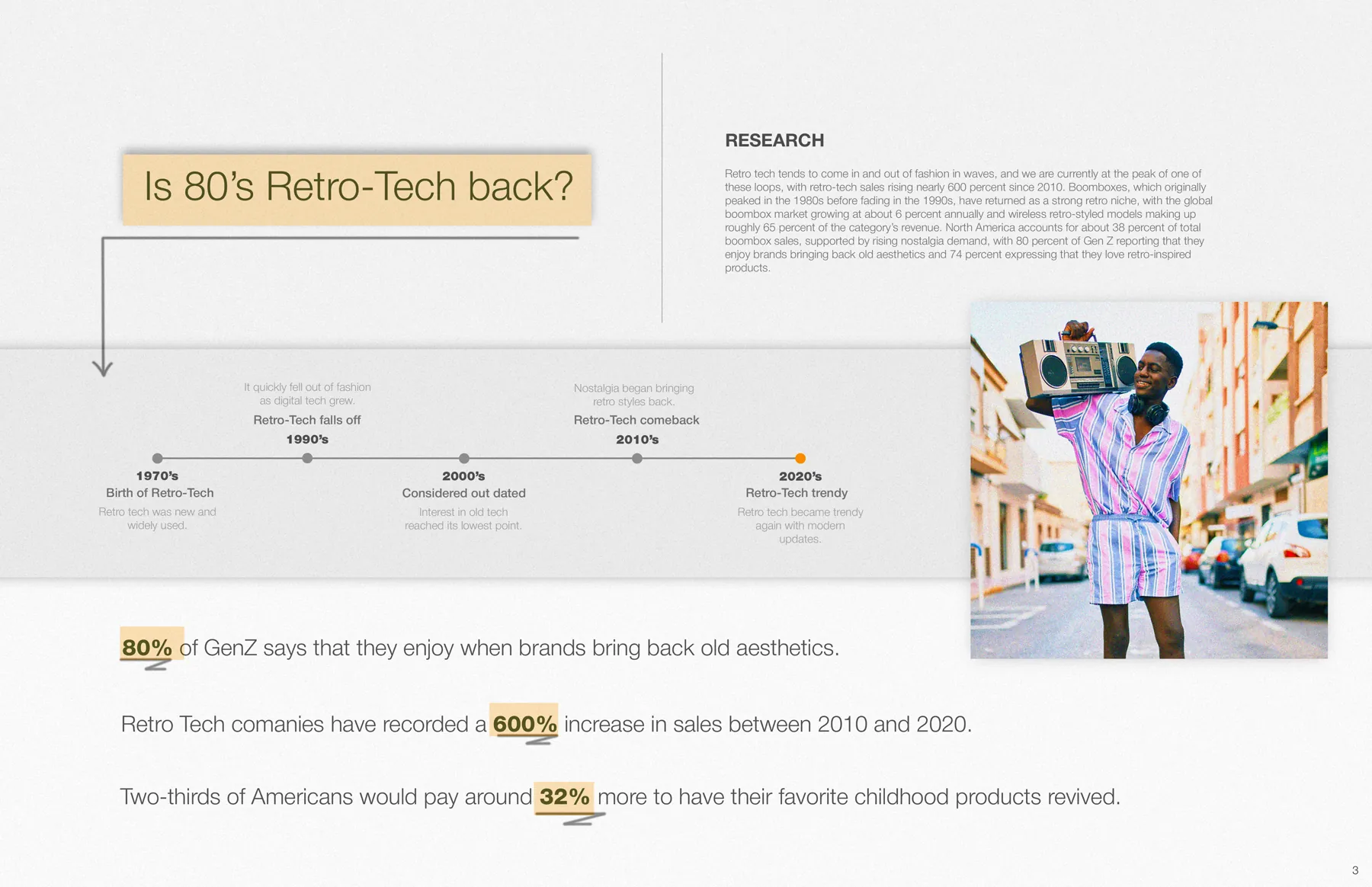
Retro-tech comes back in cycles. Data shows it peaks about every forty years. Recent growth shows it is not just nostalgia, but something people actively choose.
Mood.
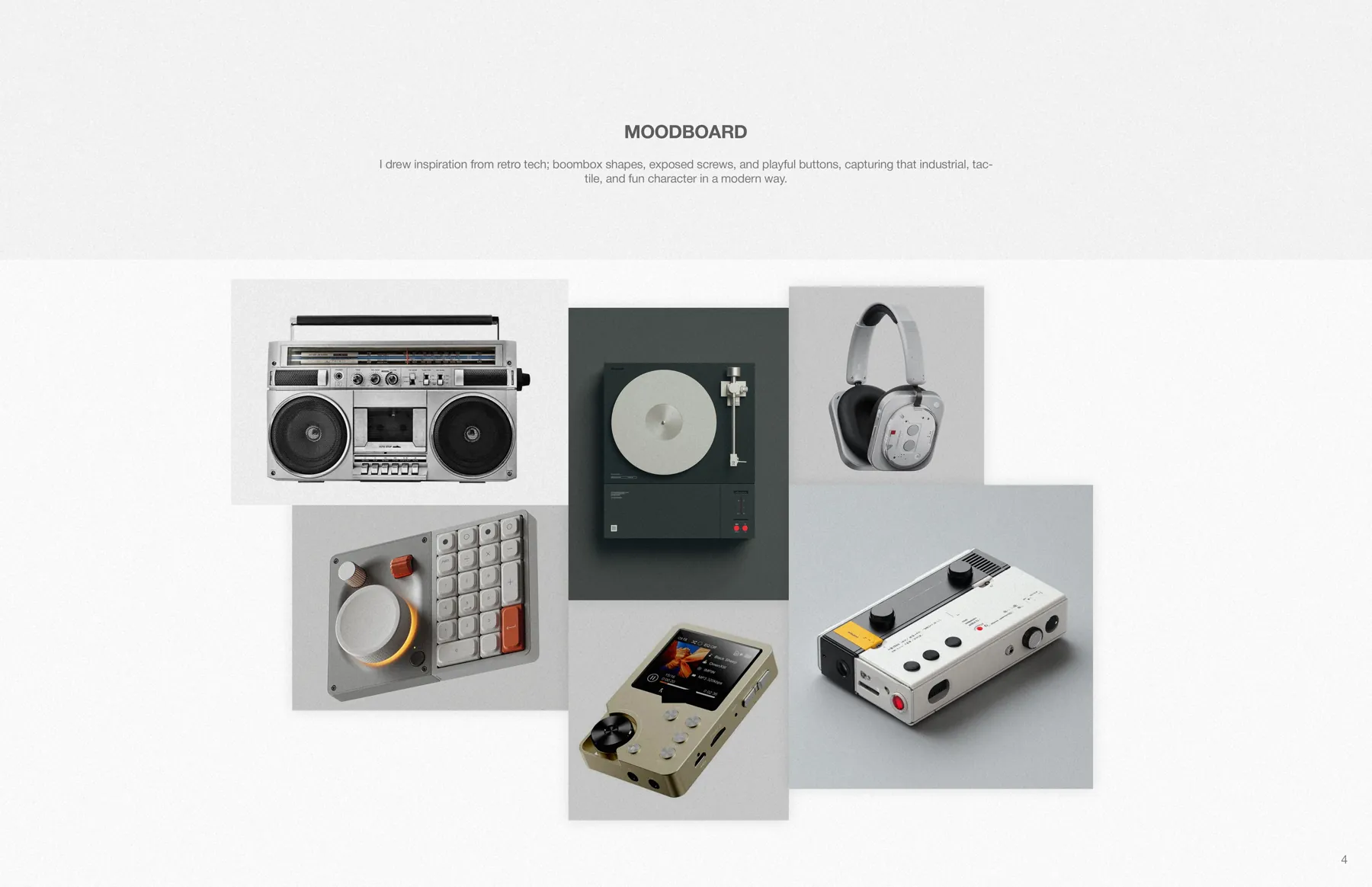
The direction pulls from objects people already connect with. Boomboxes, turntables, headphones, and older cameras. The focus is on tactile controls and simple, industrial forms that feel familiar.
Ideation.
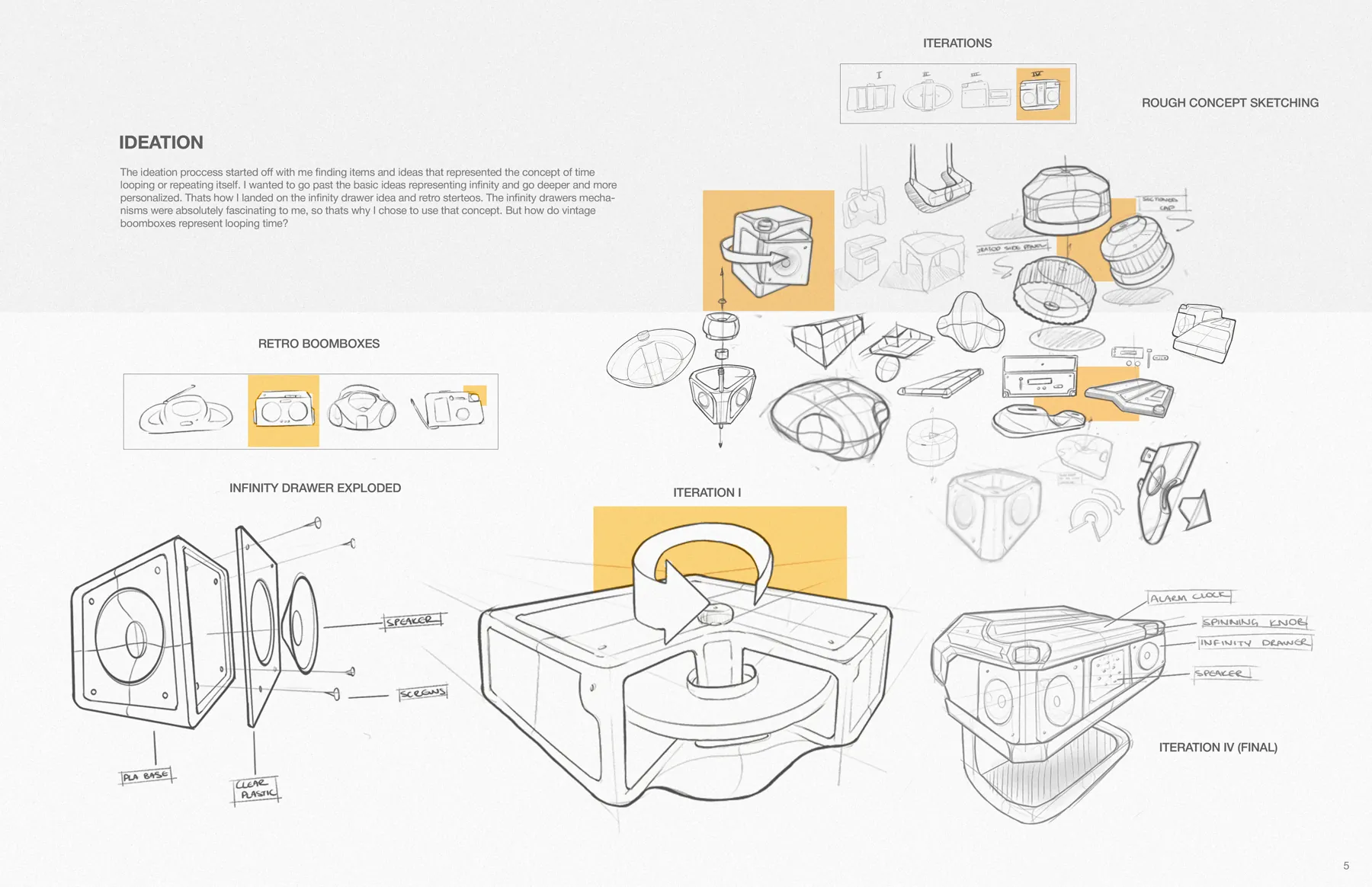
I worked on the outer form and the interaction at the same time. The shell explored boombox references, while the storage focused on keeping the experience simple and intuitive.
The goal was to make something that feels natural to use without needing explanation.
Prototyping.
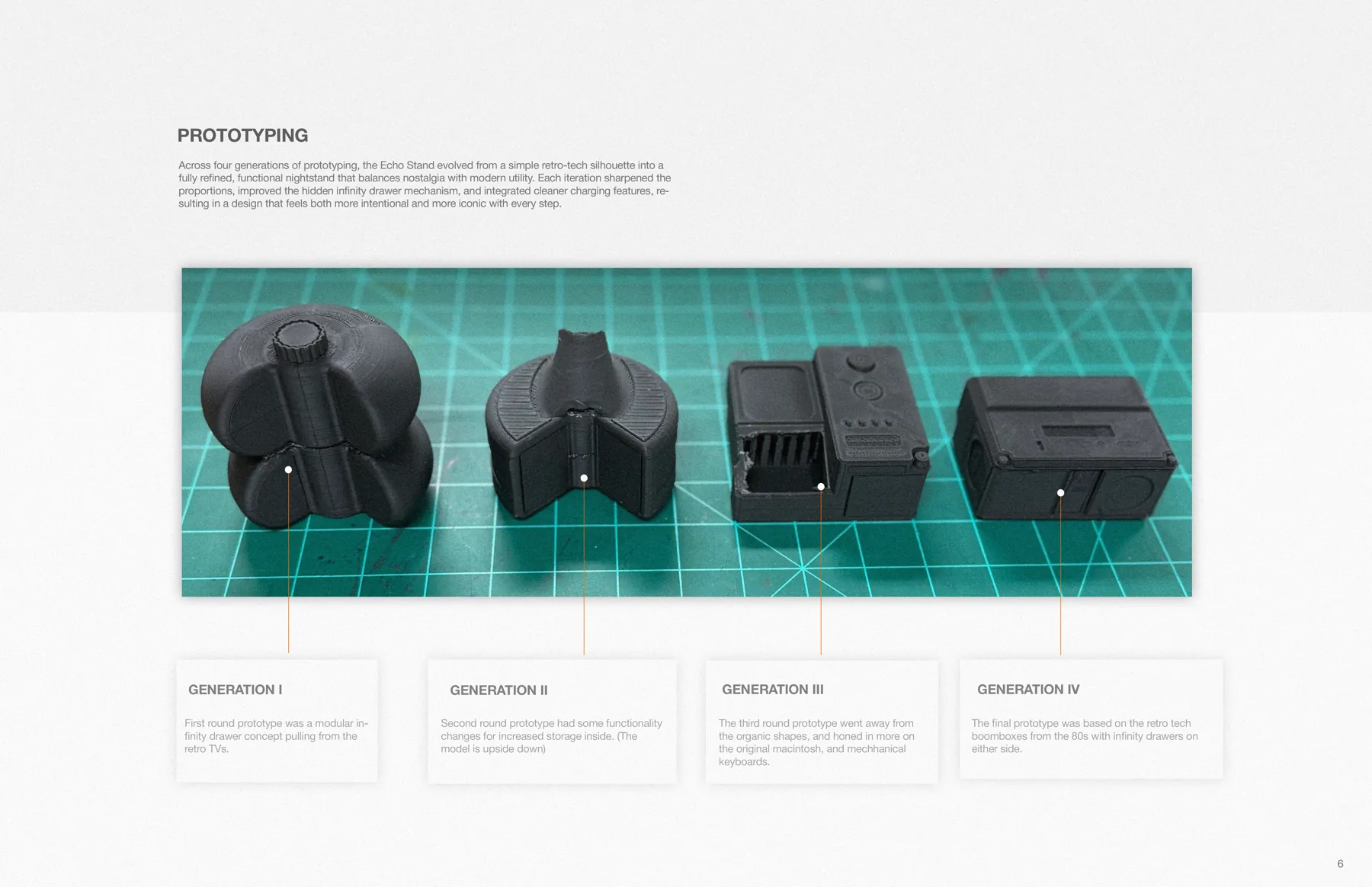
Before locking anything in, I explored different proportions through quick studies. Stretching and compressing the form to see what still felt like a boombox and what started to feel like furniture.
Directions.
I pushed a few versions further to understand the limits. Darker finishes, more speakers, and heavier retro details. Each solved part of the problem, but leaned too far into nostalgia.
The right answer needed to feel quieter.
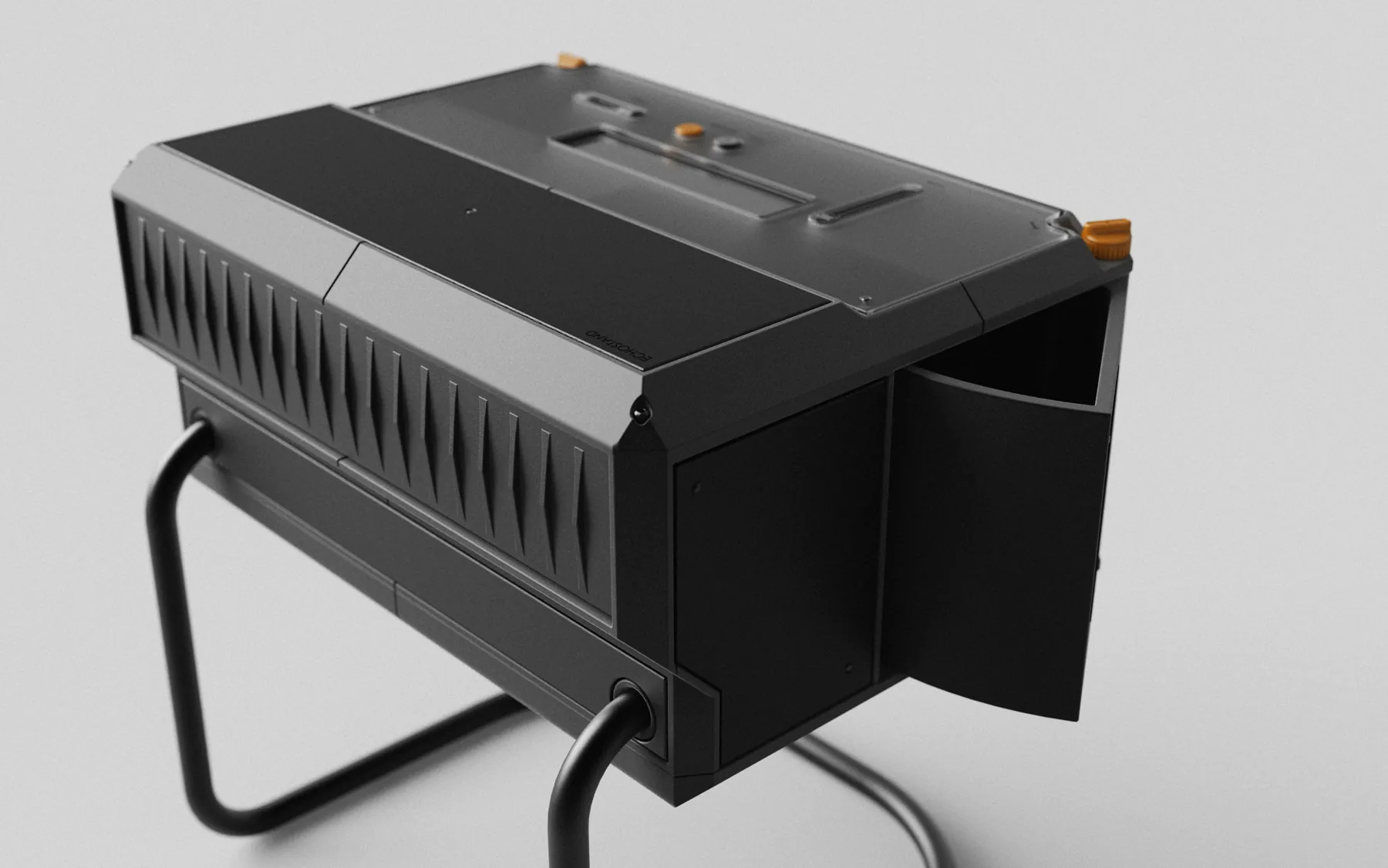
Form.
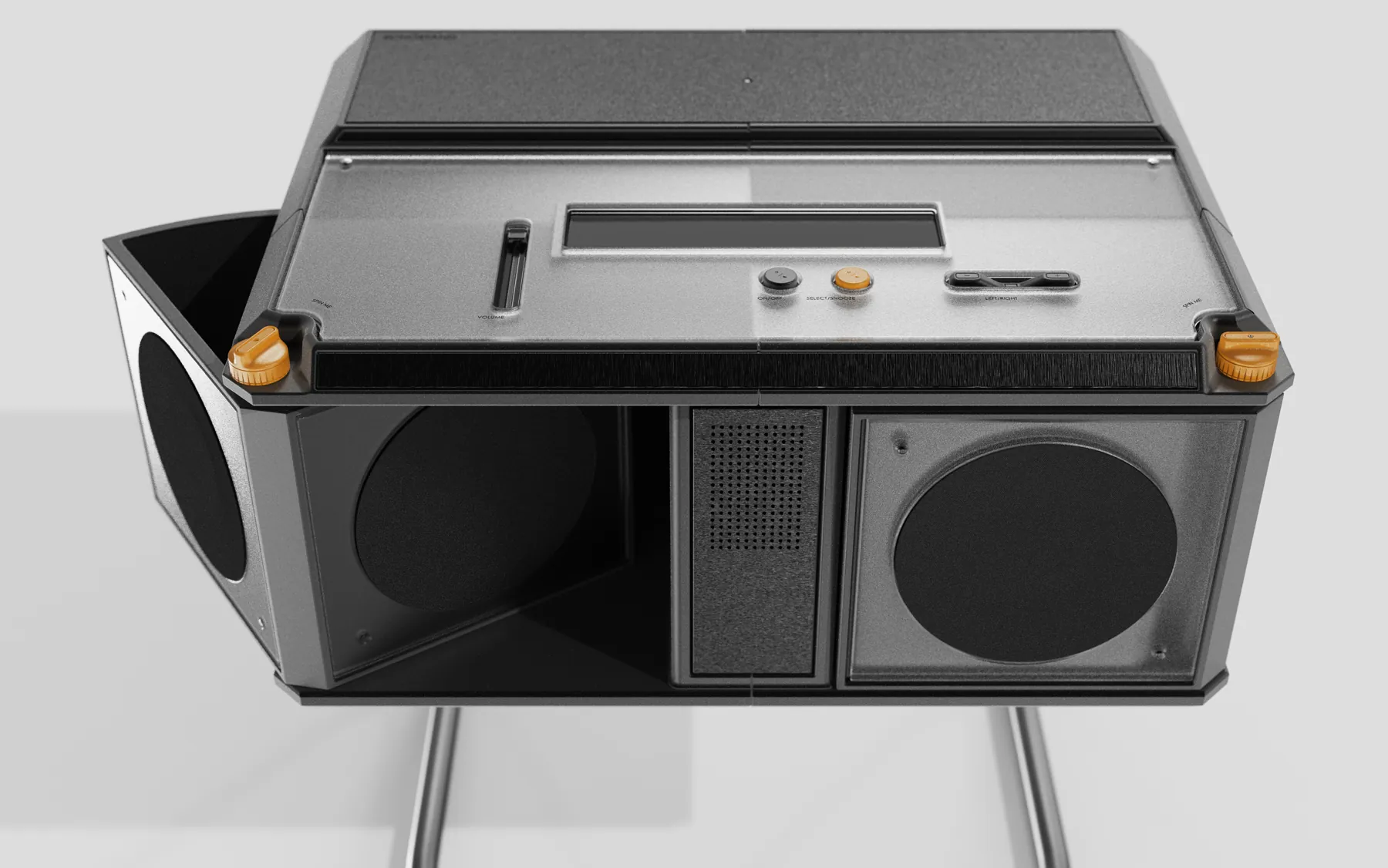
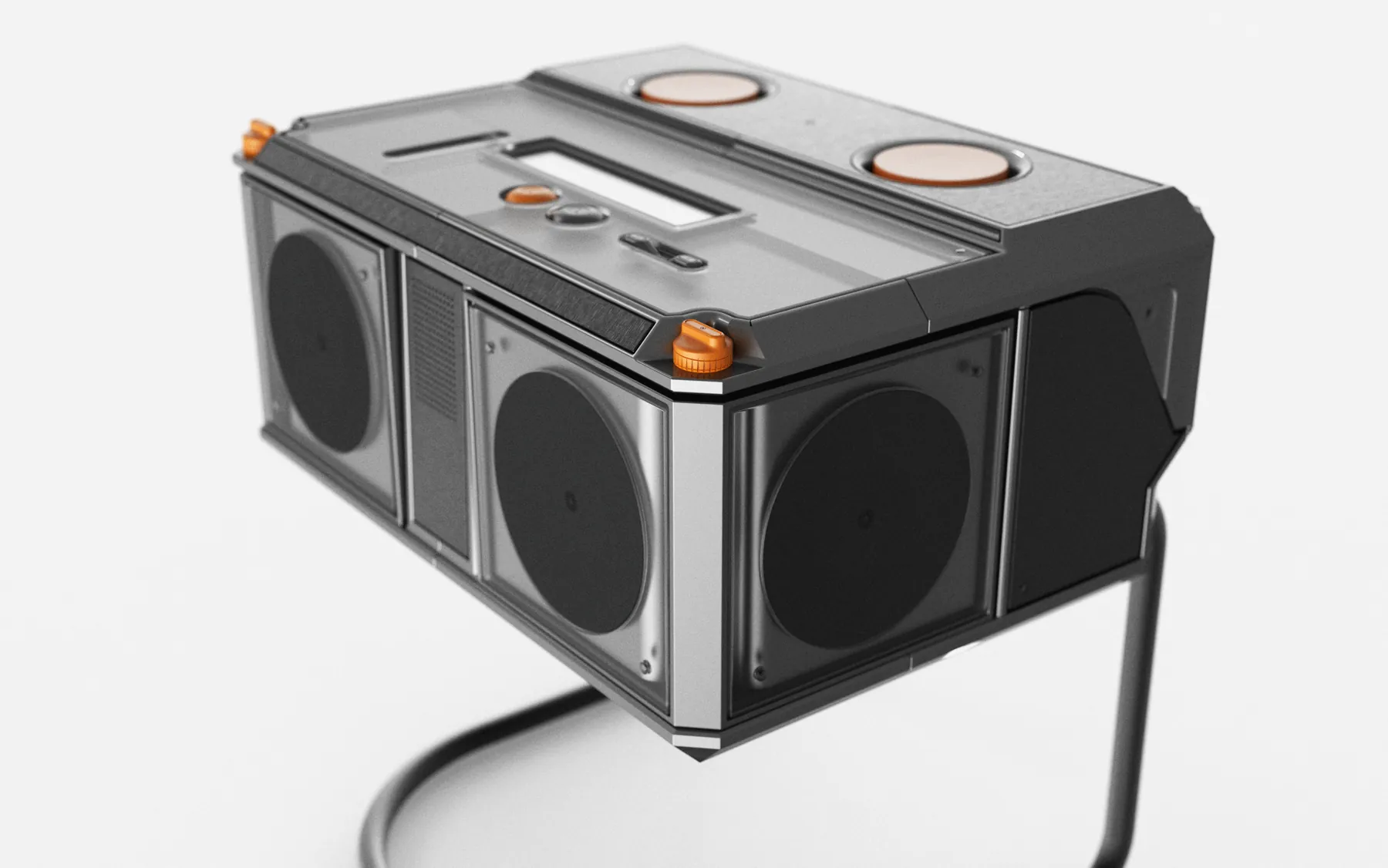
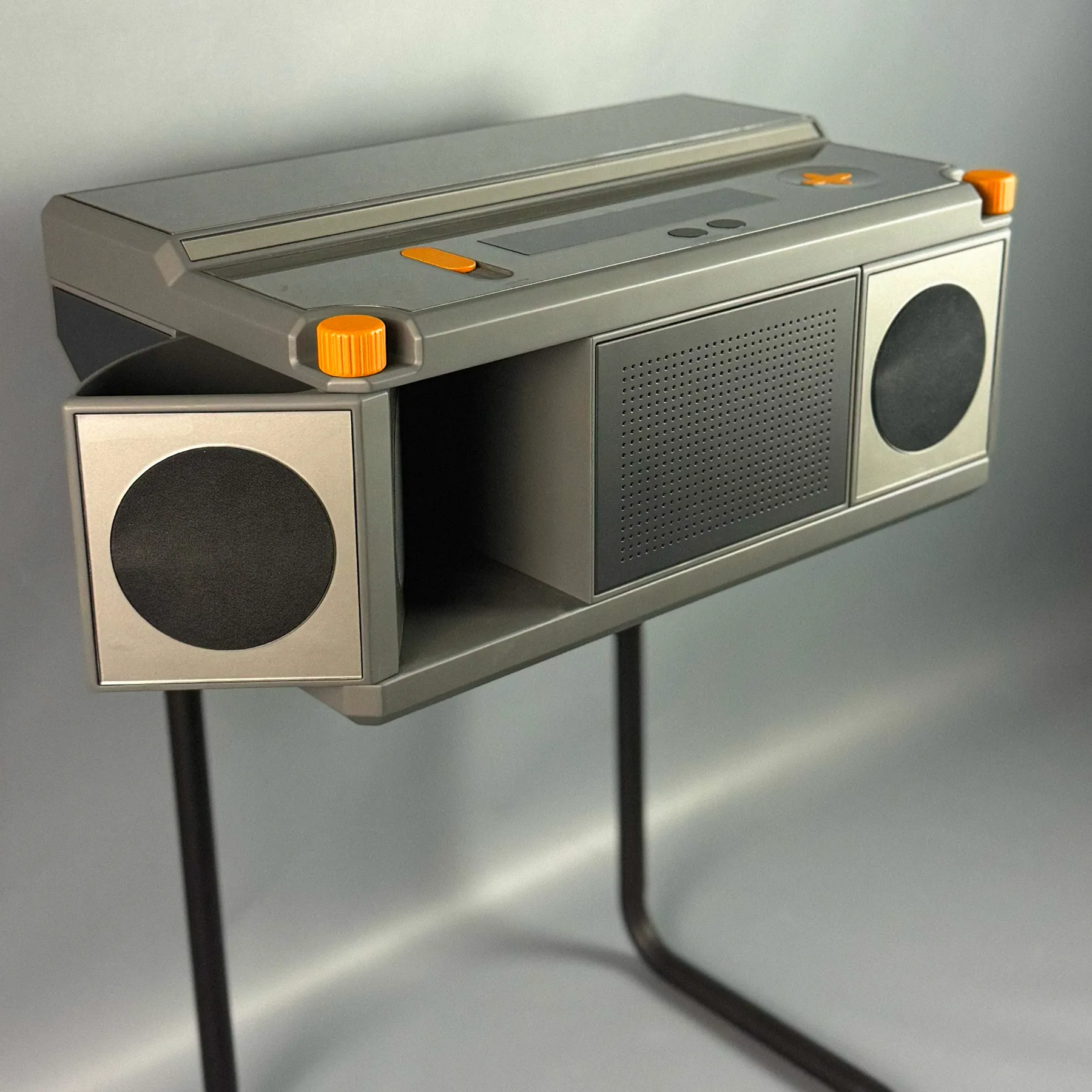
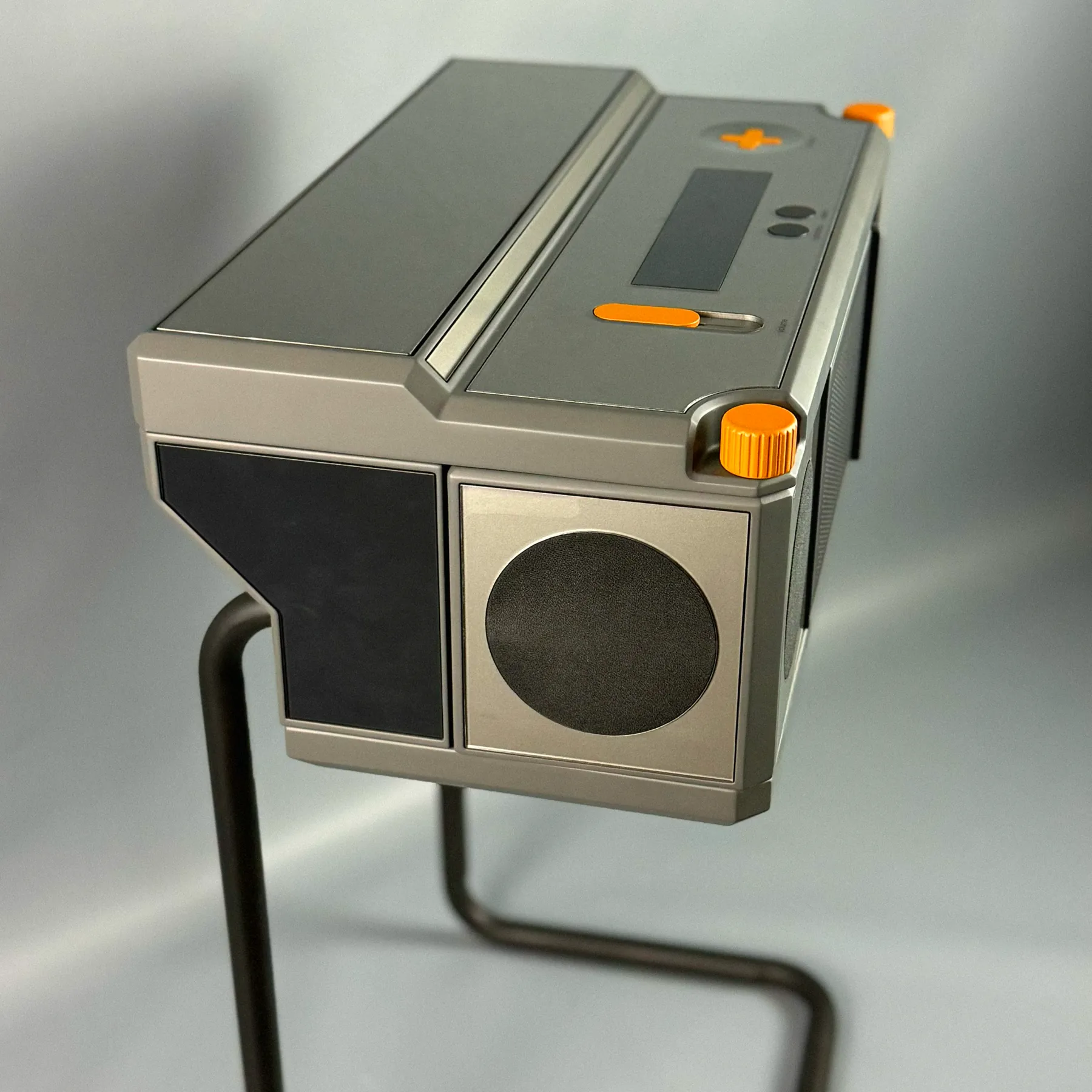
The final form takes a boombox and shifts it into a vertical nightstand. The handle becomes legs, the speakers face outward, and the top becomes a usable surface.
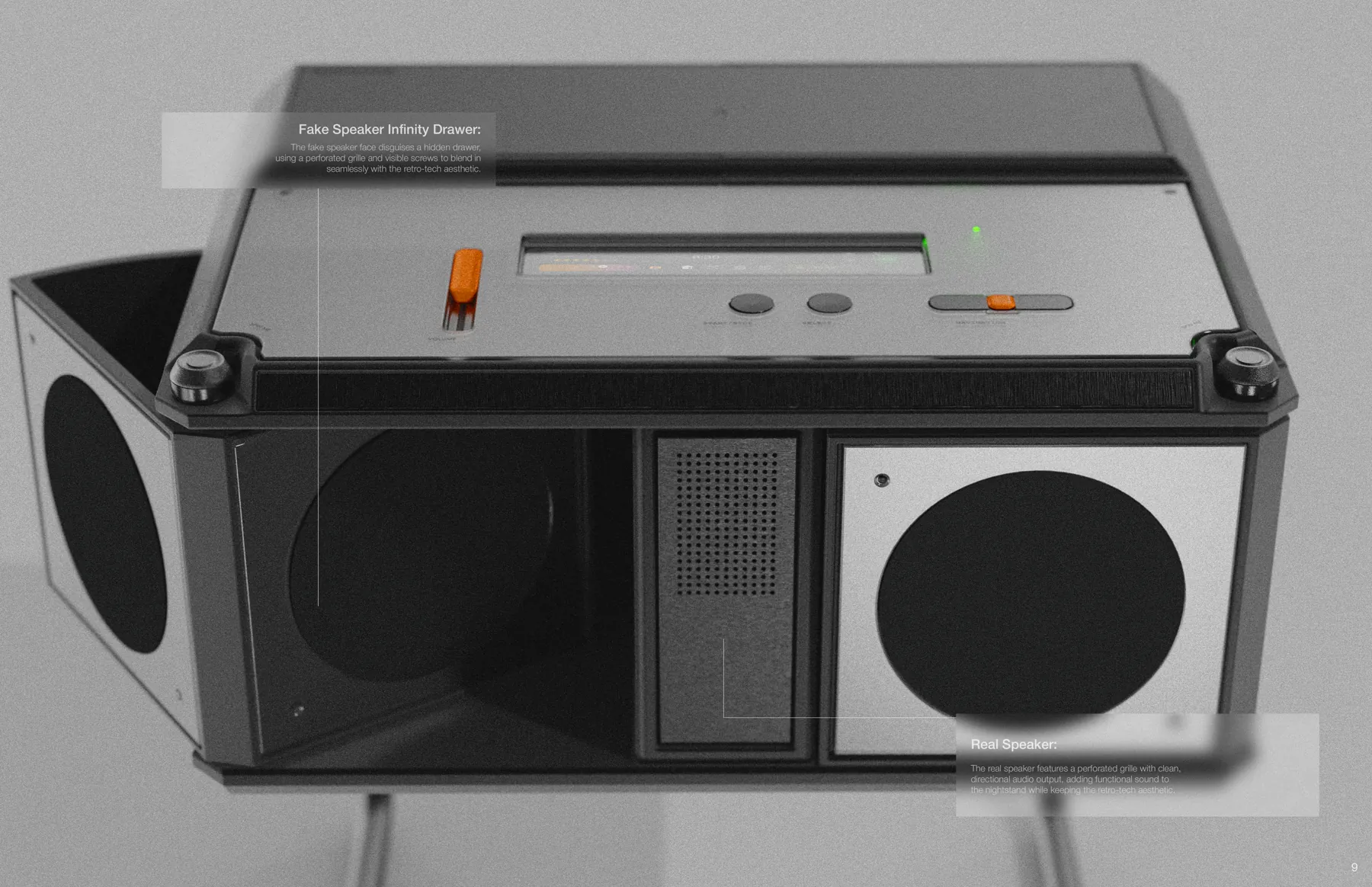
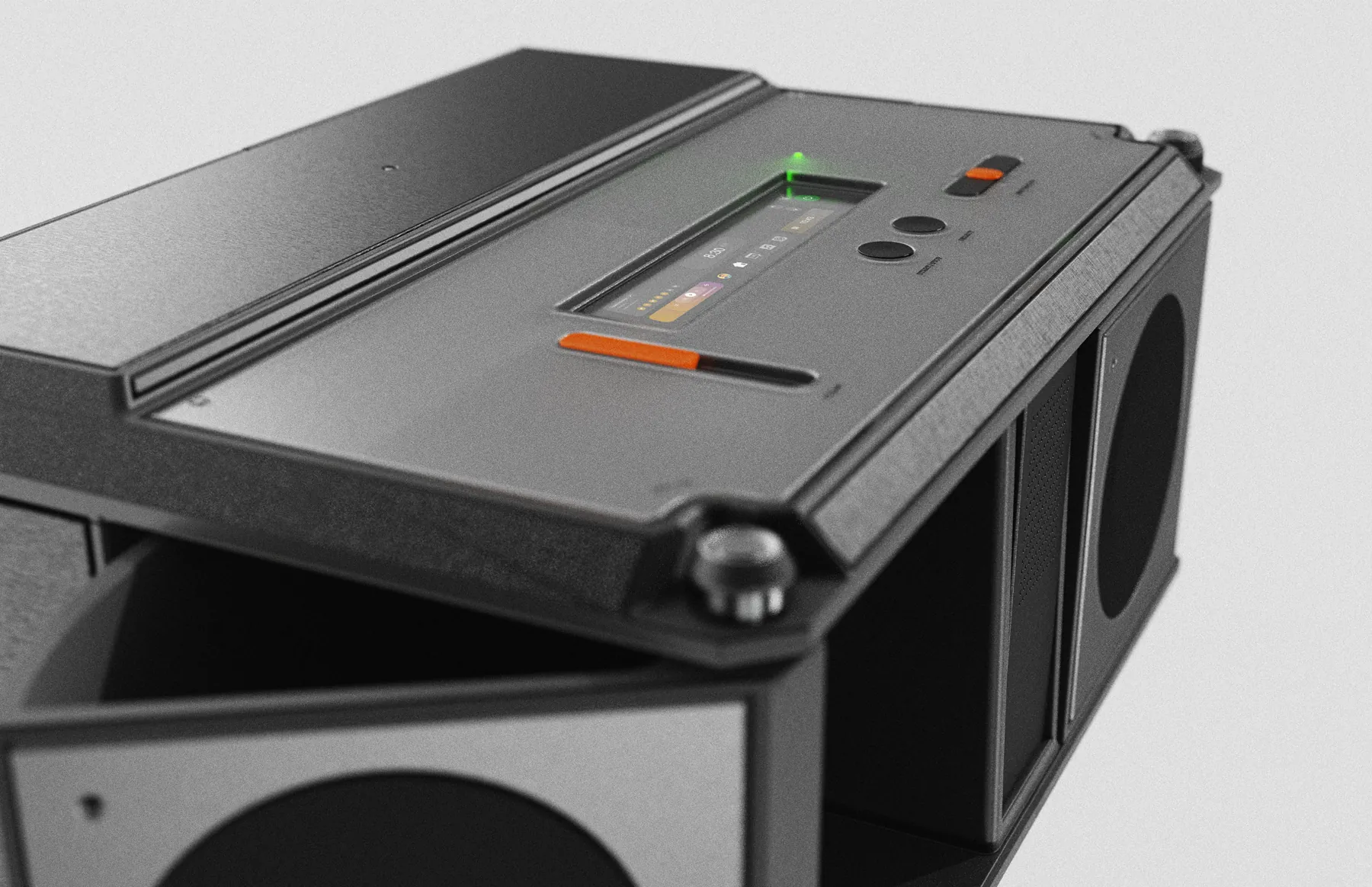
Drawer.
The drawer is the core interaction. It opens with a push, revealing a single compartment. The motion is simple and resets with each use.
CMF.
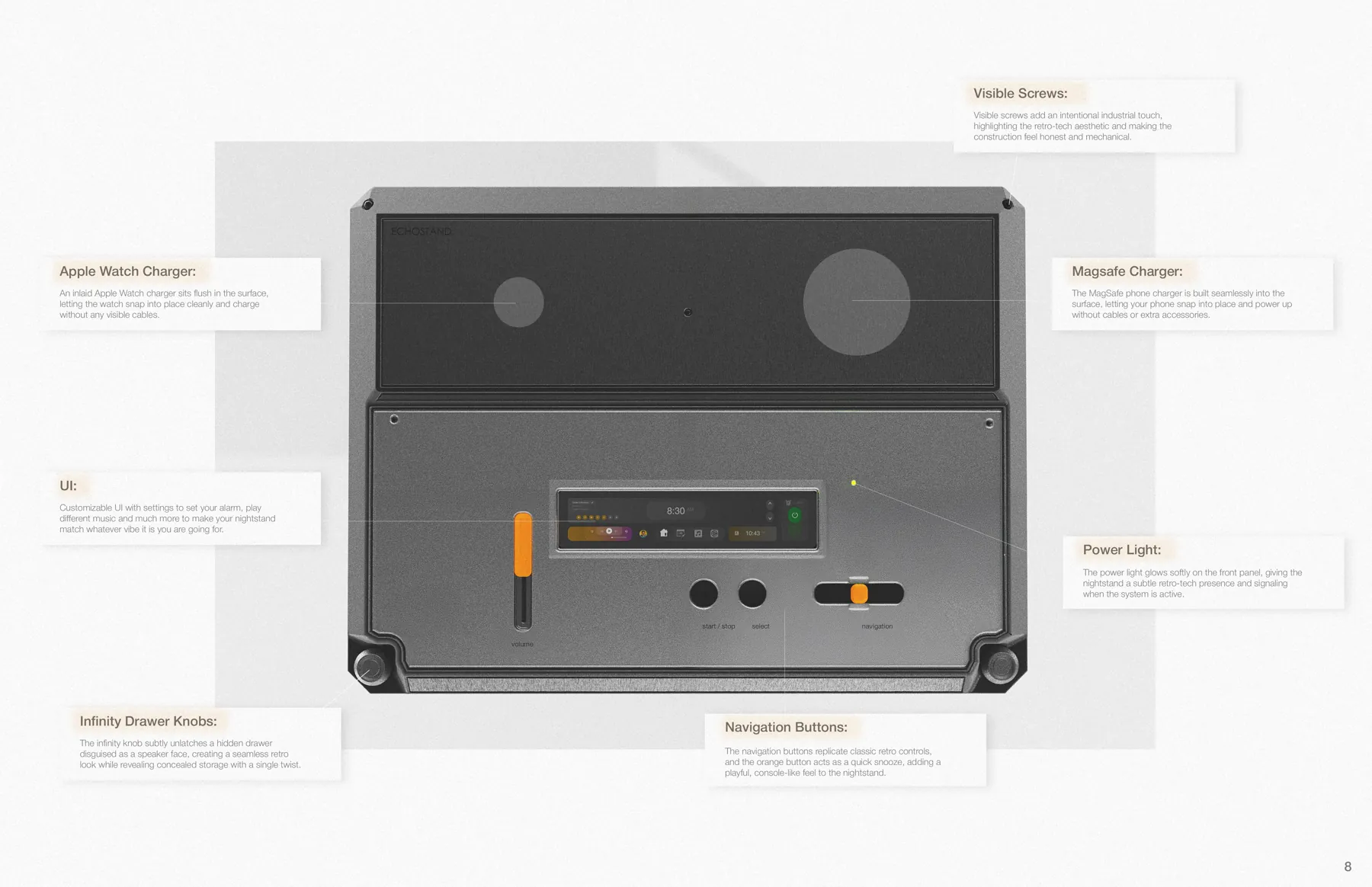
The top deck references cassette players. Sliders, buttons, and a small display. The palette stays mostly neutral, with one orange accent to carry focus.
Features.
The top handles everything. Charging, alarm, controls, and power. All of it stays flush and simple so the form stays clean.
Build.
I built a full scale prototype to test proportions and presence in a space. Seeing it in a room confirmed the balance between furniture and object.
Reflection.
This project was completed in two weeks, which pushed me to move fast and stay focused on what mattered. I tested ideas early, explored different directions, and cut anything that did not hold up.
The biggest takeaway was learning how to push the limits quickly while staying grounded in one clear idea.