
Overview.
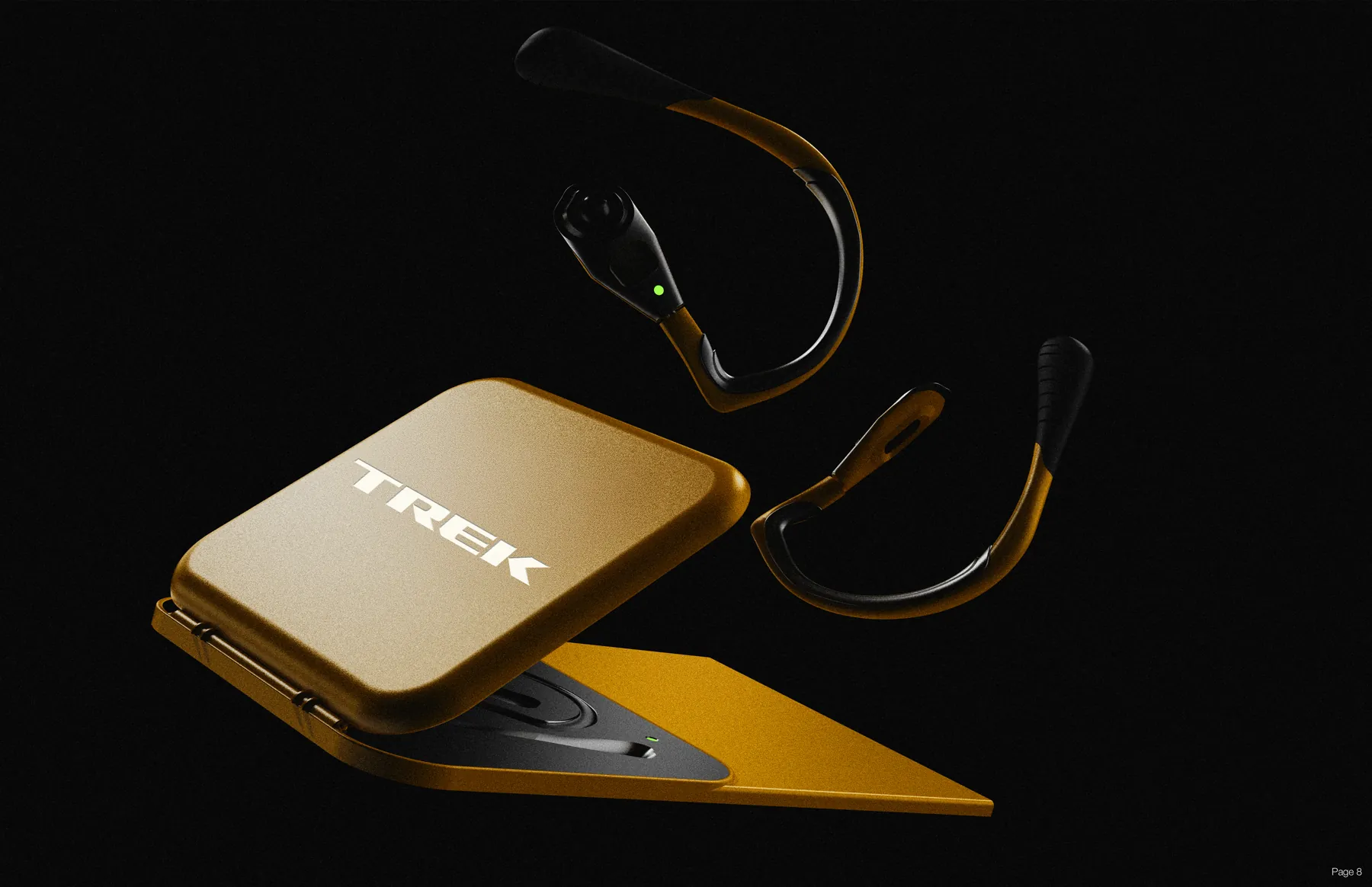
EV is a wearable system designed to improve the cycling experience across safety, entertainment, and health tracking. The earbuds use bone conduction so riders can hear audio without blocking the road. A sensor at the temple reads heart rate passively, and the case doubles as a wallet.
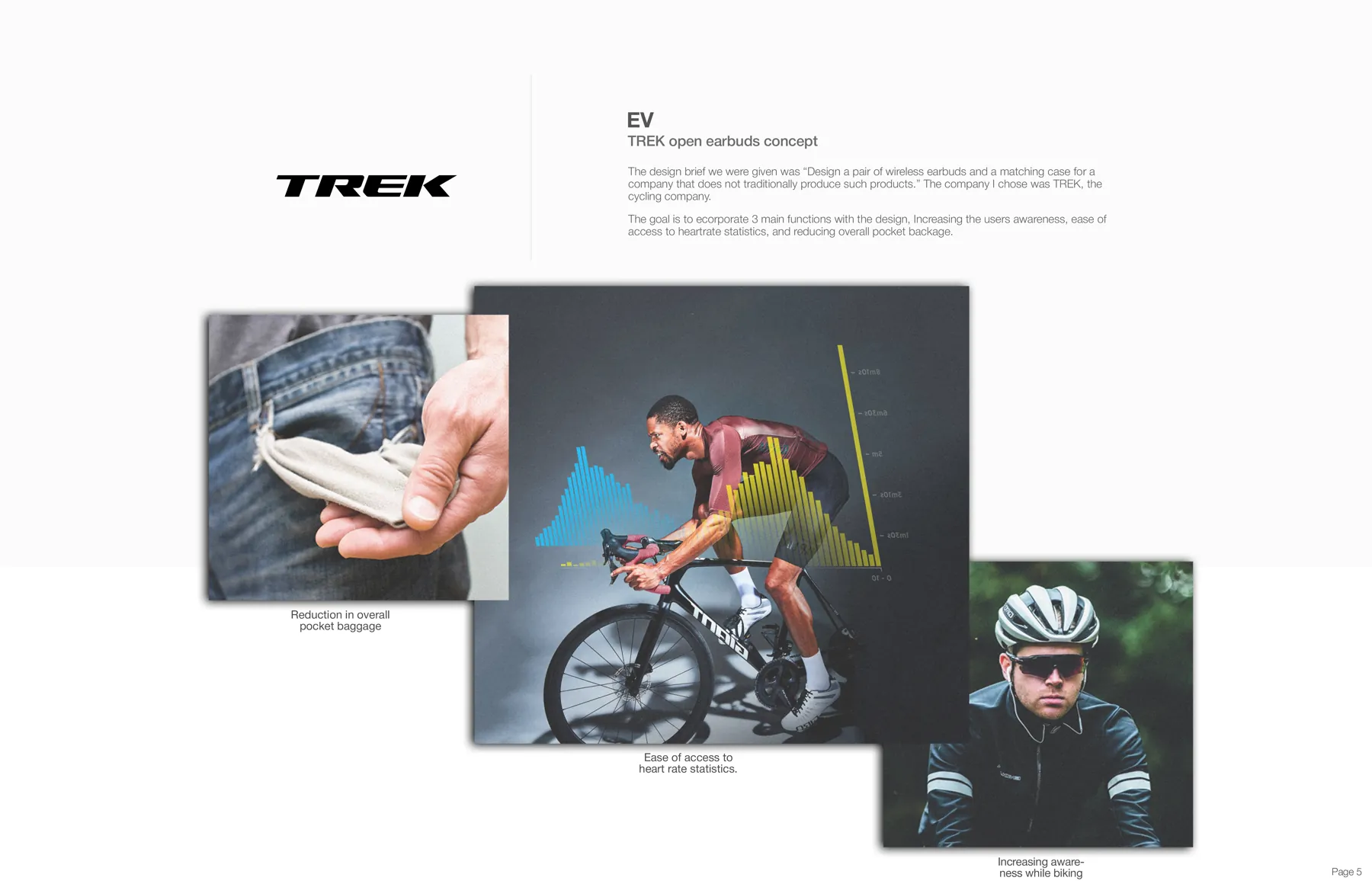
The goal was simple. Reduce the number of things a rider has to carry while improving how each one works.
Brief.
The brief was to design a pair of wireless earbuds for a brand that does not typically make audio products. The product needed to feel like it belonged to that brand, not just an existing earbud with a logo added.
I chose Trek Bicycle. Cycling already creates a tradeoff between awareness, audio, and gear. This product fits naturally into that space.
Research.
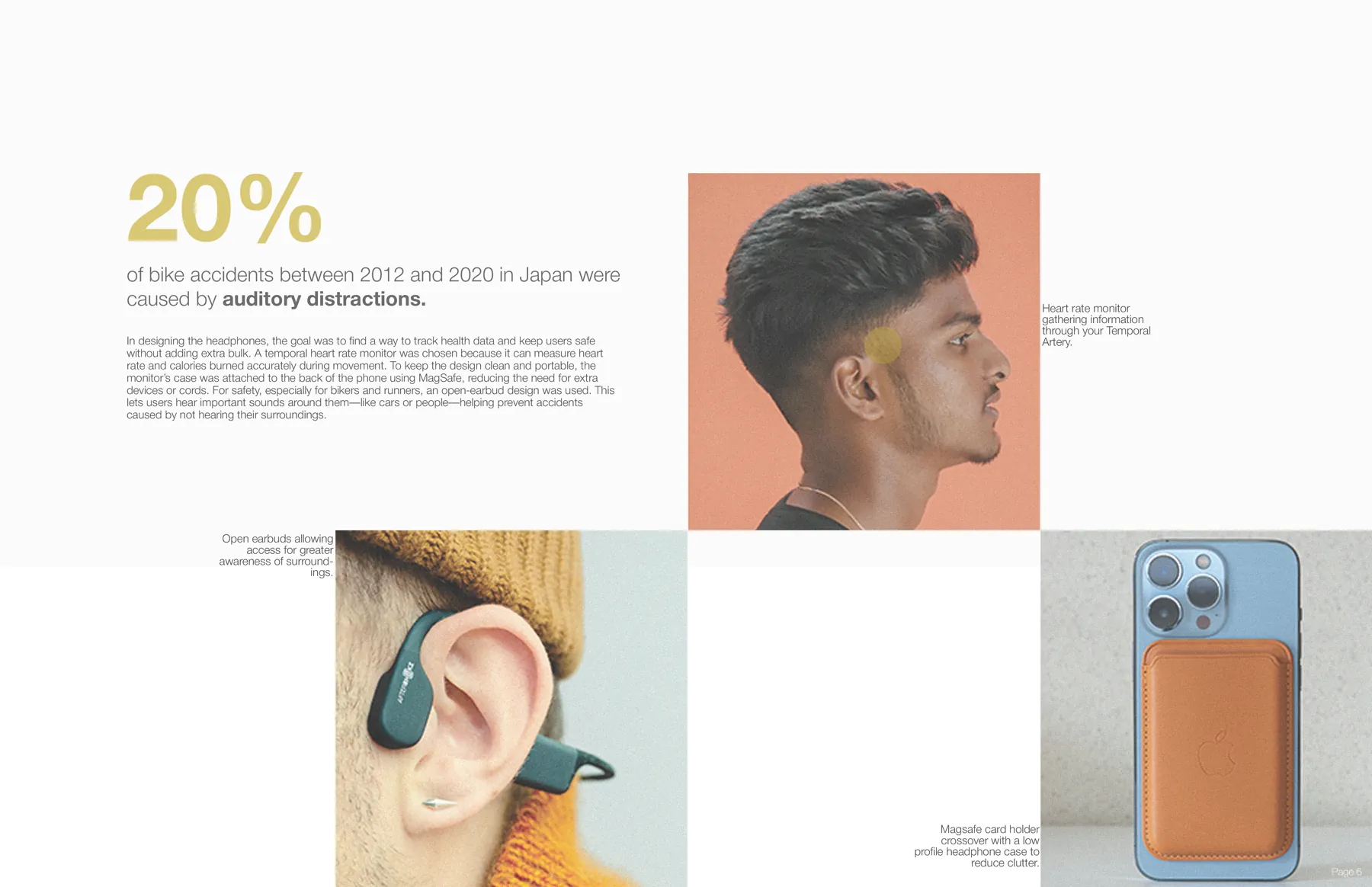
Cycling introduces a real safety problem when it comes to audio. Riders want music, but losing awareness of the environment can lead to accidents.
Opportunity.
Most riders already build their own setup. Separate earbuds, a chest strap, a phone mount, and a wallet. The problem is not missing products. It is too many of them.
Sealed earbuds block sound. Chest straps feel restrictive. Wallets and phones sit in different places.
Open-ear audio keeps awareness. A temple sensor replaces the chest strap. The case holds cards and attaches to the phone.
Language.
The form takes direct inspiration from Trek’s existing products. The goal was to make it feel like a natural extension of their design language.
Ideation.
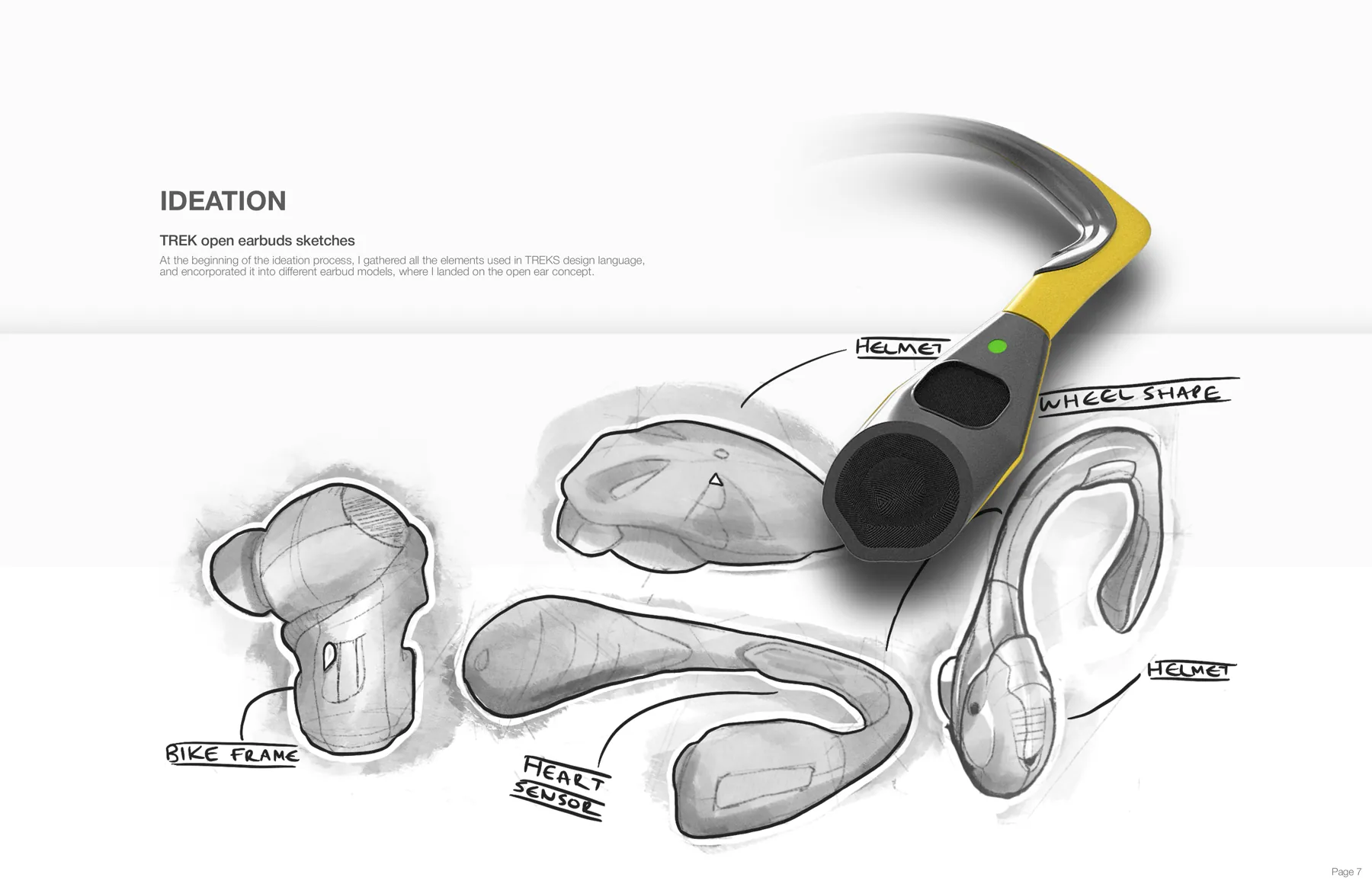
I started by pulling specific elements from Trek products and translating them into earbud forms. Each concept tested how far those references could go without breaking usability.
The final direction combined the helmet arc, circular driver, and a natural placement for the heart-rate sensor.
Form.
The final form wraps around the ear with a continuous arc that sits naturally against the head. The structure keeps the ear open while maintaining a stable fit during movement.
The geometry balances comfort, stability, and brand identity.
Materials.
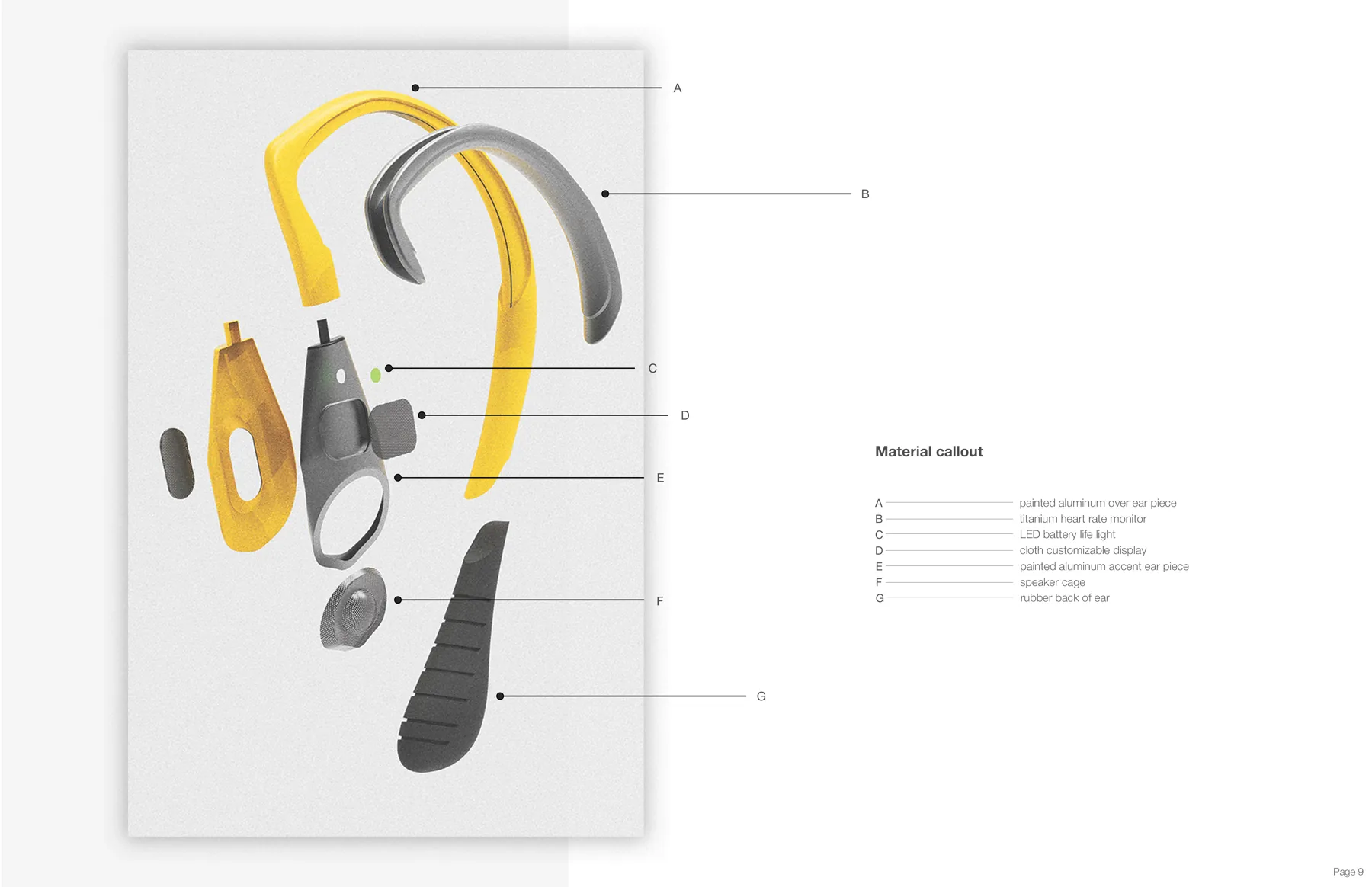
Each material was chosen for a specific role. Nothing is decorative.
Aluminum provides structure.
Titanium sits against the skin for the sensor.
Rubber adds grip and comfort.
Fabric covers the display to reduce visual noise.
Sensor.
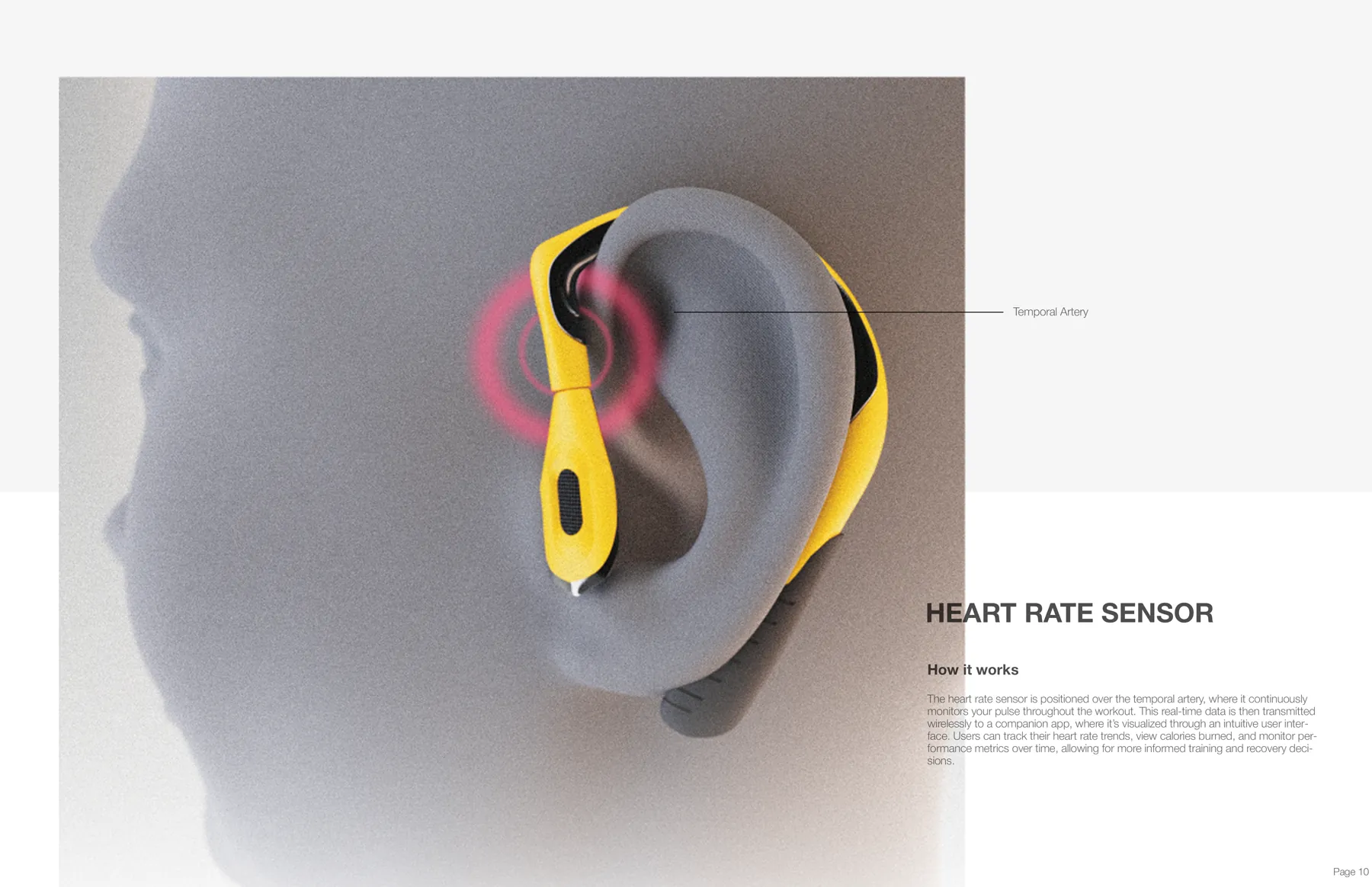
Wrist-based heart-rate tracking can become unreliable during intense activity. Movement and sweat affect the reading.
The temporal artery sits close to the skin and aligns naturally with the ear hook. Placing the sensor here allows passive tracking without extra effort from the user.
Display.
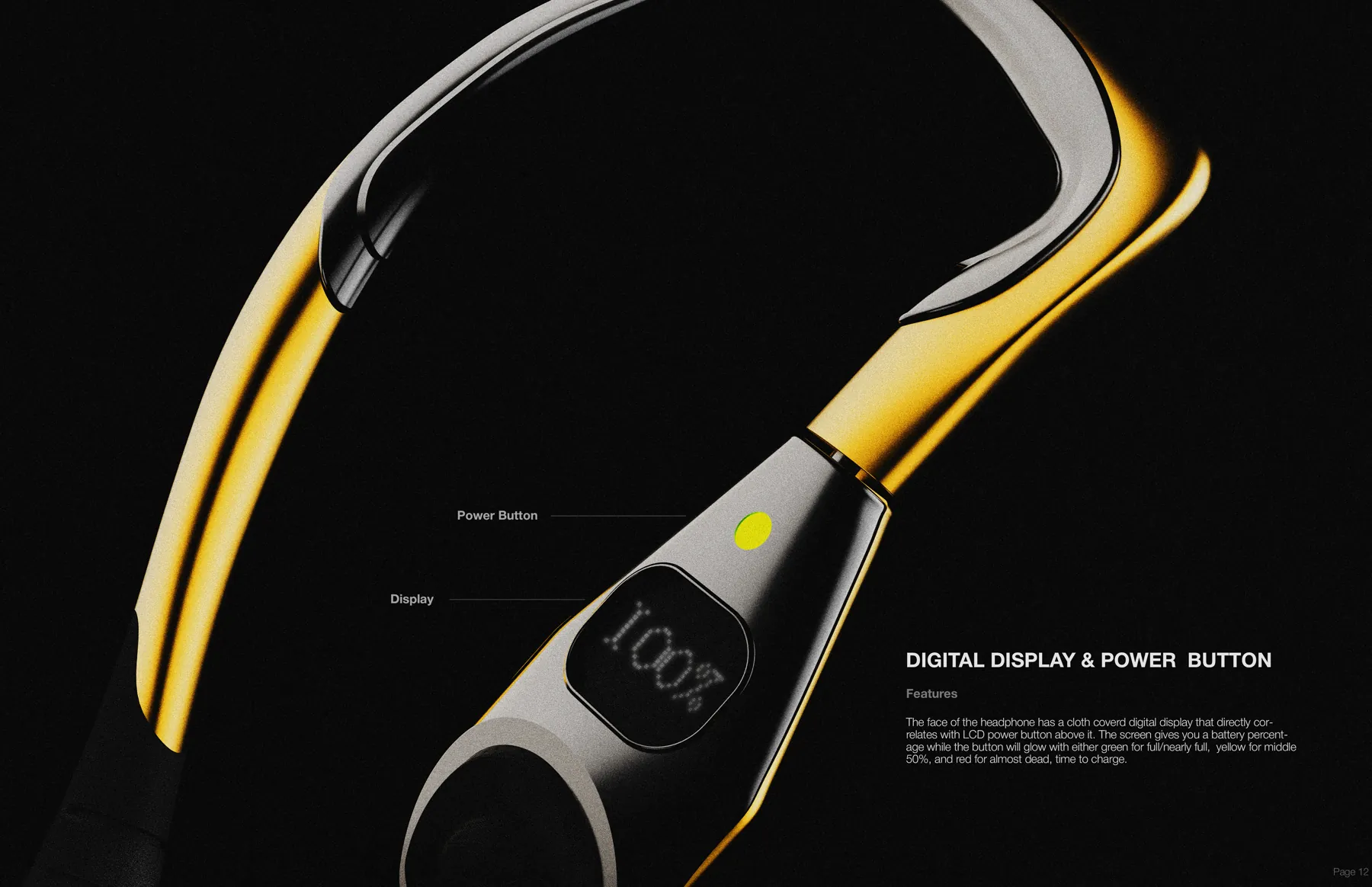
The display is hidden behind a fabric surface. When off, it disappears. When active, it shows through the material.
This keeps the product visually clean while still giving feedback when needed.
Case.
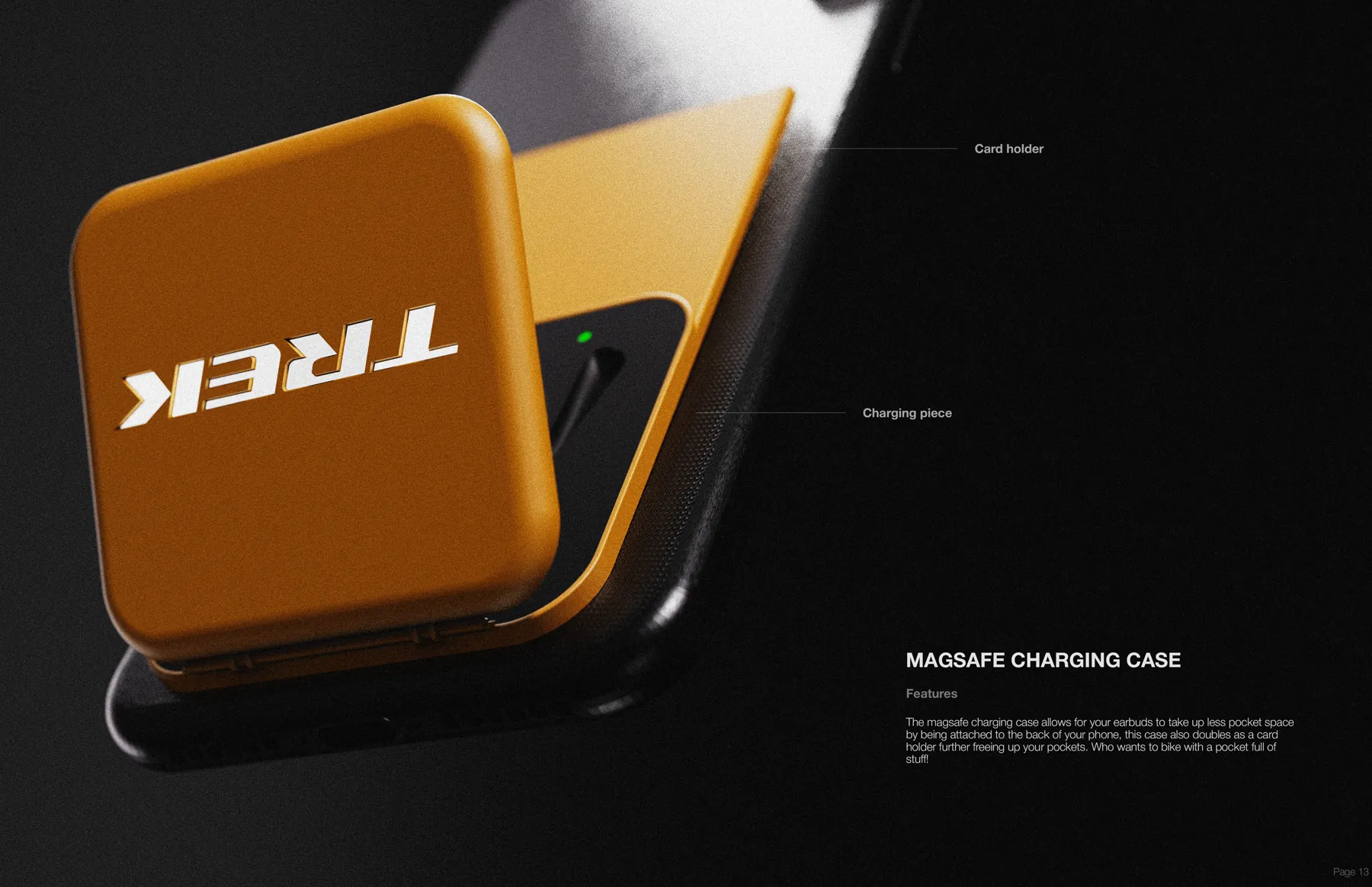
The case combines charging and everyday carry. It attaches to the back of the phone using MagSafe and holds two cards.
This removes the need for a separate wallet and keeps everything in one place.
App.
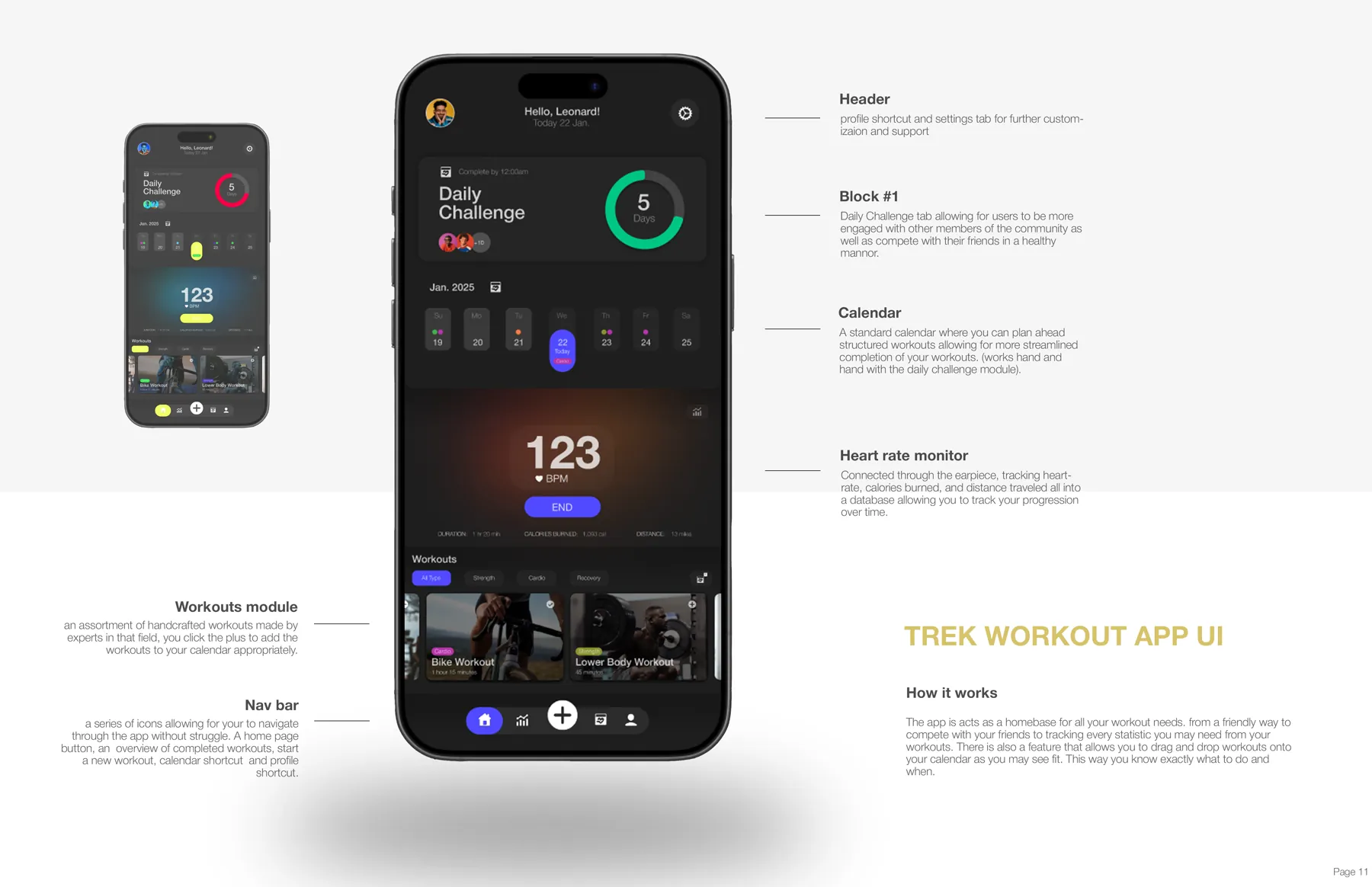
The companion app brings all ride data into one place. Heart rate, distance, and activity history are tracked over time.
The interface stays simple and readable outdoors, with minimal color used for key actions.
Reflection.
This project was about simplifying a system. Instead of adding features, I focused on replacing what riders already carry.
The biggest takeaway was learning how to design around integration. Every part of the product had to earn its place by removing something else.